Ant vs. Termite: How to Tell the Difference
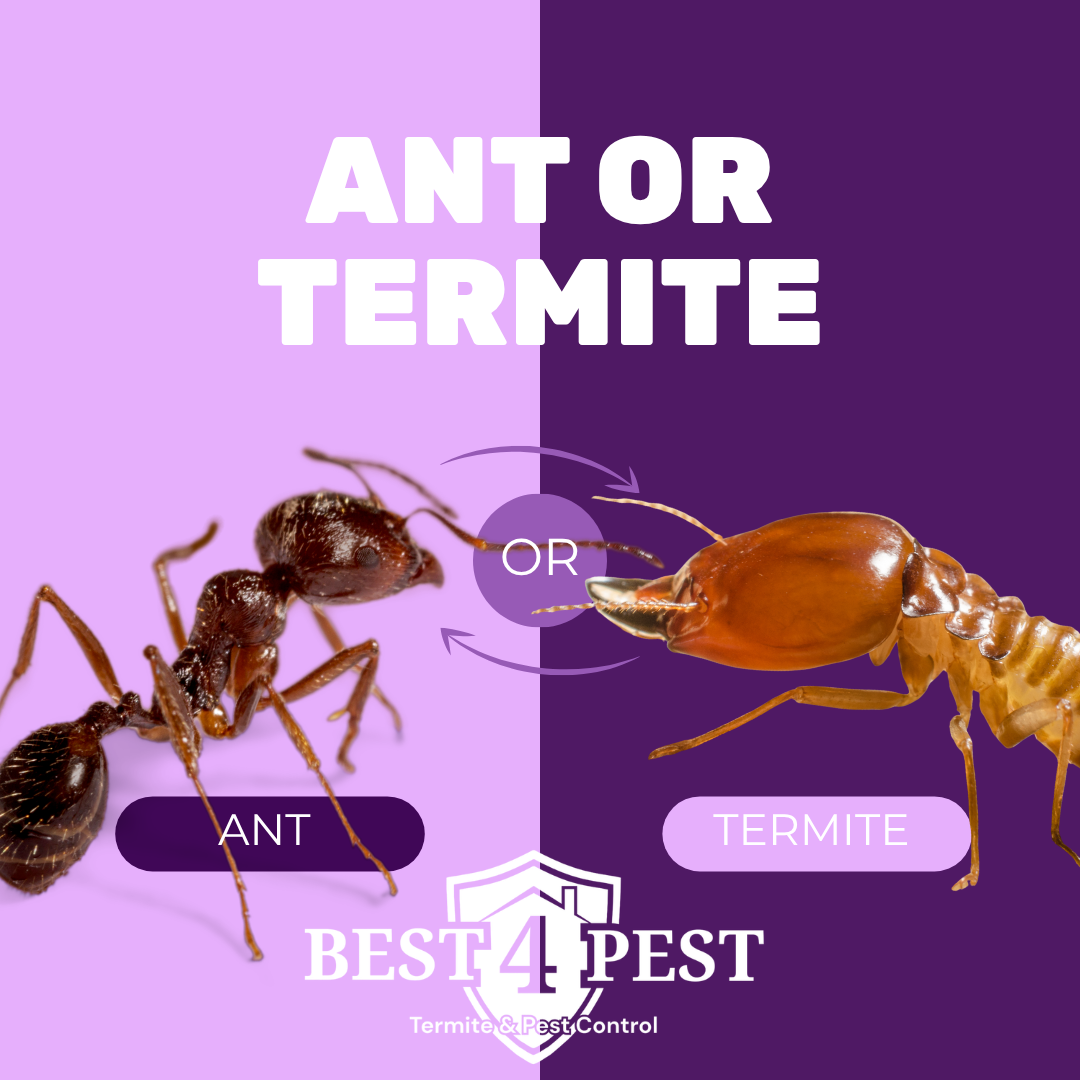
Distinguishing a termite from an ant (often confused during swarming season) comes down to a few key physical features: antennae, body shape, and wings
Ants: Have pinched, hourglass-shaped waists, elbowed (bent) antennae, and forewings that are noticeably longer than their hindwings.
Termites: Have straight, uniform bodies, straight (beaded) antennae, and four wings of equal length.
Check out our blog for more information!
You see a swarm of winged insects crawling out of your lawn or gathering around the window and you immediately ask: Are those ants… or termites?
These two pests are often confused, and telling them apart at a glance isn’t always easy.
But knowing the difference matters: ants are mostly a nuisance, while termites can quietly chew through your home’s structure.
Let’s break down the key differences so you can spot who’s who before they cause trouble.
Why People Confuse Them
Ants and termites get mistaken for each other all the time, especially in spring and summer. In North Texas, the confusion is amplified by fear.
Carpenter ants are far more likely culprits, but because the two pests are so often linked with wood damage, many homeowners assume the worst.
Swarmers look similar. Both ants and termites have winged reproductive forms (called swarmers) that emerge in large numbers to mate and start new colonies. These winged insects are the ones you’ll most often see flying around windows, doors, or porch lights, and at a glance, they look nearly identical.
Both love wood. While ants don’t actually eat wood, carpenter ants hollow it out to make nests. Termites, on the other hand, feed directly on cellulose. To a worried homeowner, seeing insects in or near wood is enough to trigger the T-word.
They both show up close to home. Ants trail through cracks in the foundation or gaps in siding; termites swarm indoors or build mud tubes near window sills and walls. Either way, the insects appear exactly where you don’t want them.
Ant vs. Termite: Physical Appearance
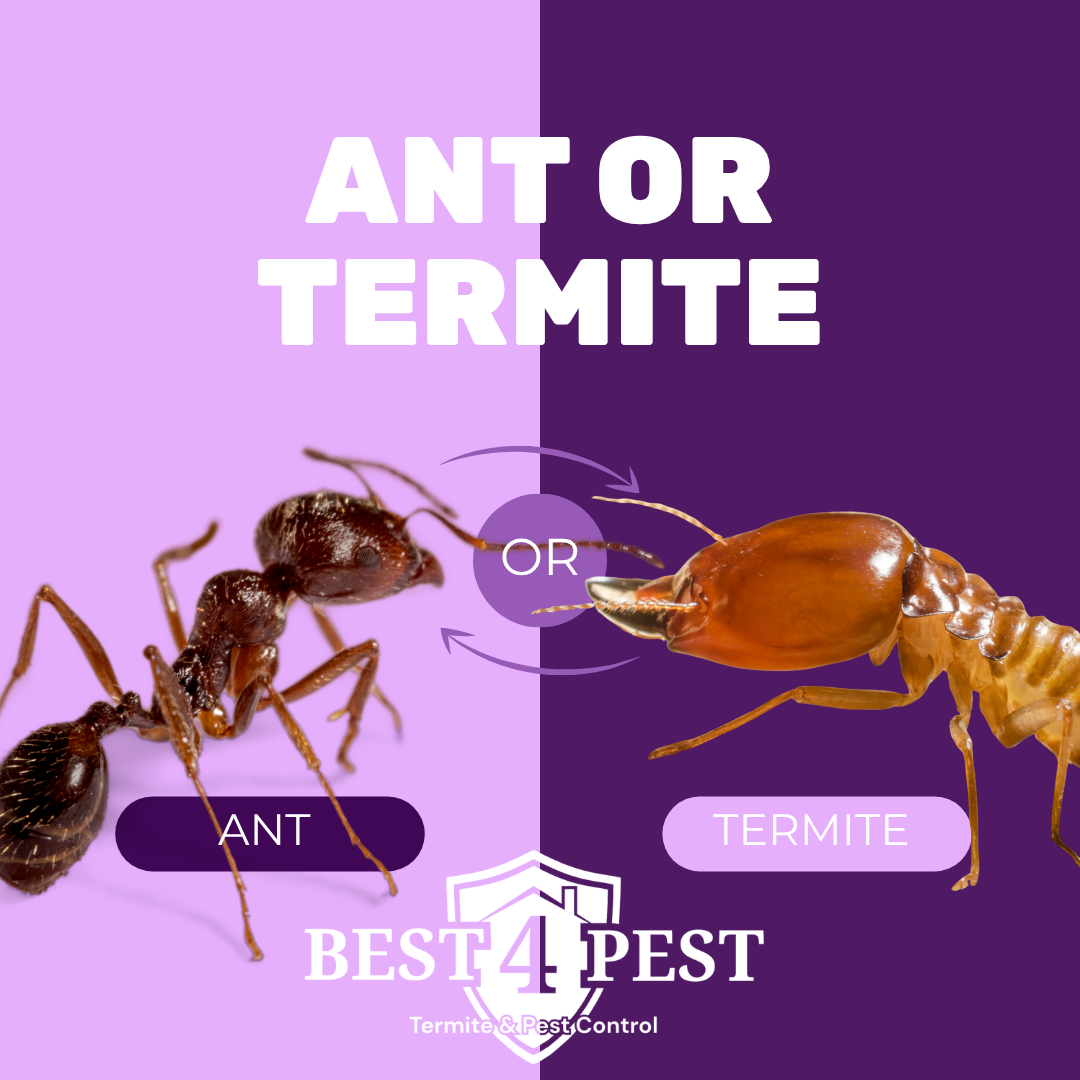
You can refer to the difference chart and image above, but here’s a more detailed version:
Waist shape: Ants have a narrow, pinched “hourglass” waist. Termites, in contrast, have a broad, straight waist that looks more uniform.
Antennae: Ant antennae are bent or elbowed; termites’ antennae are straight and bead-like.
Wings: Ant wings are uneven. The front pair is longer than the back pair. Termite wings are all the same length and often fall off easily, which is why piles of discarded wings near windows or doors are a classic sign of termites.
Colour: Ants are typically dark brown, black, or reddish. Termites are lighter, pale and creamy, or light brown, since they avoid light and prefer hidden environments.
Size: Termites tend to look thicker and more uniform; ants appear segmented and defined.
Pro tip: If you’re not sure what you’re looking at, snap a photo with your phone and zoom in. The waist and antennae alone usually give away whether you’ve got ants or termites.
Behaviour & Habitat
Not sure from their physical appearance? Watch what they do.
Ants are bold. They build visible mounds in the soil, create long foraging trails, and happily invade your kitchen in search of sweets and proteins. Carpenter ants target damp or rotting wood, hollowing it out for nesting space. They don’t eat the wood, but they can still cause damage.
Termites are stealthy. They stay hidden in soil, wood, or behind walls. Instead of trails, they build mud tubes to stay moist while moving between soil and food sources. They don’t come looking for crumbs or sugar. They’re after cellulose, which means wood, cardboard, and paper.
In short, ants announce themselves, while termites hide their activity until the damage is already serious.
Ant Nests vs. Termite Colonies
Ants and termites are both social insects, but their nesting habits are worlds apart.
Ant nests: Often visible as soil mounds (ant hills) or small entry holes in the lawn. Colonies range in size but are generally smaller and more scattered. Ants are also mobile, and they’ll relocate if disturbed or threatened.
Termite colonies: Hidden underground or inside wood. Colonies are massive, often numbering in the hundreds of thousands. Termites work 24/7, silently tunnelling and feeding. They won’t abandon their colony unless absolutely forced.
Damage Comparison: What’s at Stake
The damage each pest causes is where the difference really hits home.
Ants: Most species are nuisance pests. They contaminate food, invade kitchens, and build unsightly mounds in the yard. Carpenter ants are the exception since they tunnel into damp or decaying wood to build nests, which weakens the structure over time. Still, they don’t eat wood, so their destruction is slower and less severe than that of termites.
Termites: Termites are silent destroyers. They eat cellulose, which means they’ll chew through structural beams, flooring, drywall, furniture, and more. Their feeding can continue unnoticed for months or even years. By the time you see signs, the damage is already extensive. Keep your eyes and ears open for hollow-sounding wood, bubbling paint, sagging floors, or discarded wings.
How Do You Get Rid of Ants and Termites Before They Take Over
Treatment and prevention go hand in hand. As a general rule of thumb: reduce moisture across the yard, keep your lawn trimmed and debris-free, and inspect for swarms in spring.
Catching pests early is good, but keeping them from settling in at all is better.
For ants:
Keep food sealed and clean up spills quickly
Take garbage out regularly and keep bins tightly closed
Trim back vegetation touching the house; ants use branches as highways
Seal cracks in foundations, windows, and doors
Outdoor colonies can often be controlled with targeted baits or perimeter treatments
For termites:
First and foremost, schedule inspections and termite control; termites are nearly impossible to detect without a trained eye. DIY sprays don’t reach hidden colonies.
Keep wood and soil separate. Don’t let deck posts, siding, or firewood sit directly on the ground.
Fix leaks and drainage problems. Moisture draws termites.
Maintain gutters and downspouts to keep water away from the foundation.
Store firewood well away from the house.
Pest Control You Can Count On…
Ants and termites may look alike at first glance, but they couldn’t be more different in what they mean for your home. Ants are messy invaders, while termites are destructive freeloaders. Knowing the difference helps you act quickly and protect your biggest investment.
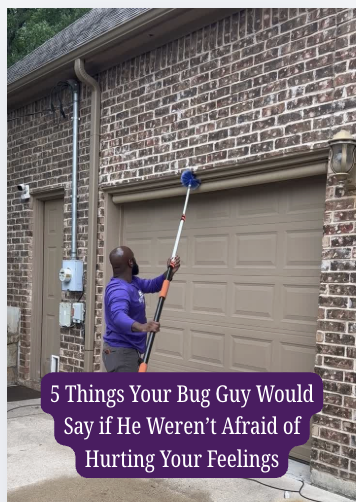
What your pest guy would tell you if he weren’t afraid of hurting your feelings…
What Your Pest Control Tech Would Say if He Weren't Afraid of Hurting Your Feelings.
If your pest control tech could be 100 percent honest without worrying about feelings… here’s what actually keeps pests coming back
What Your Pest Control Tech Would Say if He Weren't Afraid of Hurting Your Feelings.
If your pest control tech could be 100% honest without worrying about feelings… here’s what actually keeps pests coming back
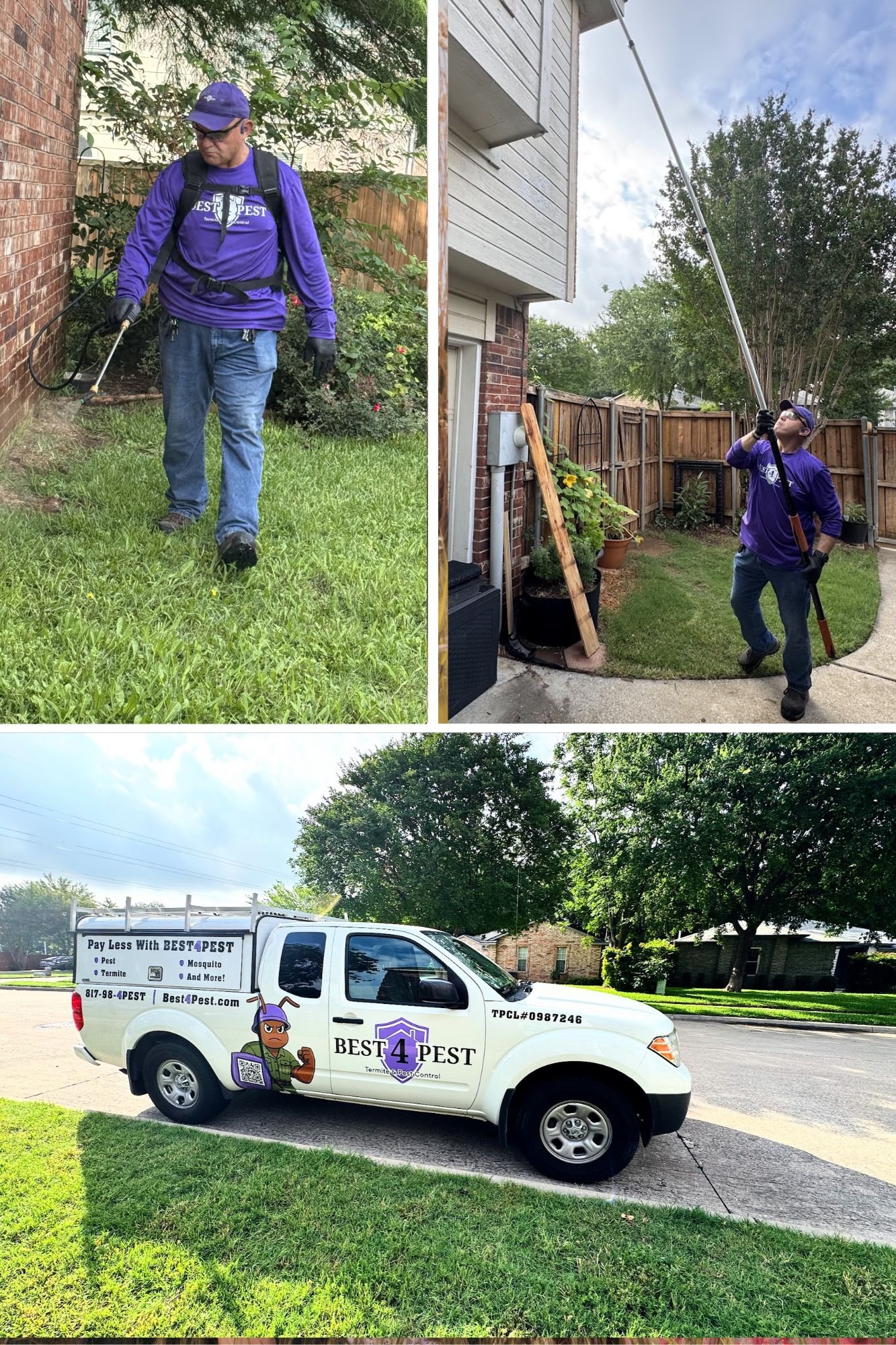
1️⃣ Stop Leaving Food Out! This feeds the problem.
Crumbs, pet food, and open containers turn your home into a nonstop buffet for ants and roaches. Less food access means fewer pests.
2️⃣ It May Be Time for a Yard Sale! Clutter creates perfect hiding spots.
Basements, garages, and storage areas packed with boxes are ideal nesting zones for mice and insects. Decluttering removes shelter and limits infestations.
3️⃣ Leave it to the Professionals! Store bought sprays only treat symptoms and ignore the root cause.
They may kill visible bugs, but they do nothing to eliminate nests, colonies, or entry points hidden behind walls and cabinets. Treating the root cause will eliminate the problem and reduce the likelyhood of your pests returning. This is an ongoing process and will need maintenance but this is our specialty. We are experts on bug, pests, rodents and more so that you don’t have to be.
4️⃣ Dry it up, Buttercup! Moisture problems invite pests inside.
Leaks, damp basements, wet sinks, and humidity attract ants, roaches, silverfish, and rodents. Fixing moisture issues is a core part of real pest control.
5️⃣ Prevention is Key & Early treatment saves money and stress.
Waiting until an infestation explodes makes treatment harder and more expensive. Preventative pest control always works better than emergency fixes.
We are here to help with any of your pest control issues. Schedule your free inspection and estimate today.